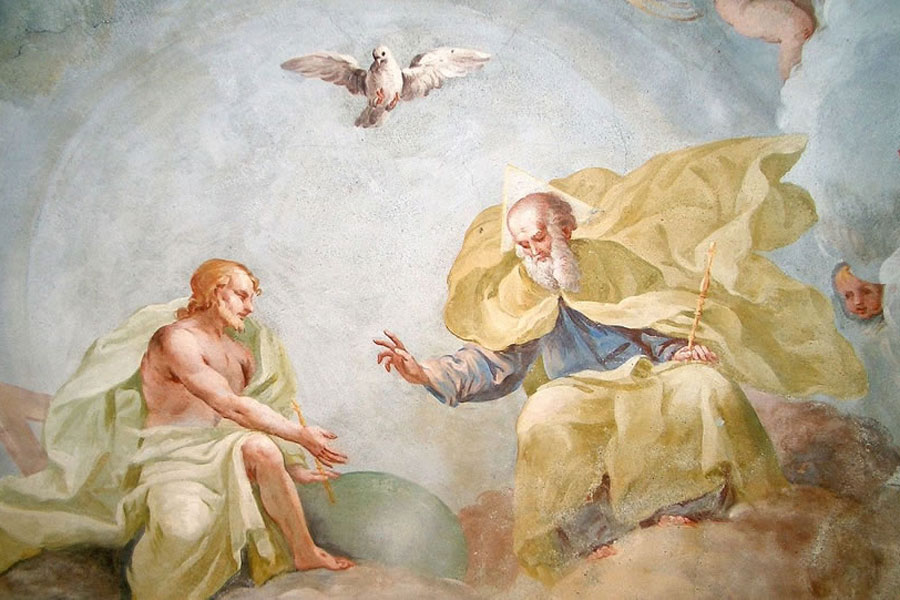
The Most Holy Trinity
05-31-2026Pastoral Reflections© LPi Fr. John MuirI was 16 years old on a youth group retreat in the mountains. One night, I opened my heart to the message being proclaimed: that God so loved the world that He sent His Son for us. Later, I lay under the pine trees and looked up at the countless stars. They seemed different. No longer cold, distant balls of chemical reac- tions, they appeared as an expression of God’s love, as if He were giving those stars directly to me. The truth of God sending His Son changed how I saw the whole universe.
READ MORESUMMER 2026: ORDINARY TIME II
05-26-2026Reflections and ResourcesThe seasons roll on each year as winter turns into spring and spring steadily moves toward summer. During these same seasons, our liturgical year goes forward, too, as Ordinary Time becomes Lent, Lent turns into Holy Week, the Paschal Triduum, and Easter, and Easter then leads us back into Ordinary Time. It’s a rhythm that we experience every year as Catholics, an opportunity for each of us to participate in the life, death, and resurrection of Jesus. You can read about the Church’s liturgical year on the US Bishops’ website, https://bit.ly/USCCBYear.
READ MORE
(Practicing) Catholic - Recognize God in Your Ordinary Moments
05-24-2026Pastoral ReflectionsColleen Jurkiewicz DormanIf you’re asthmatic, you know the phrase “as natural as breathing” doesn’t always make a lot of sense. Maybe that’s because breathing isn’t always natural. Sometimes, it’s supernatural.
I come from a family of asthmatics. In my earliest childhood memories, my sister’s nose and mouth are covered with a bulbous plastic mask connected by clear tubes to her transportable nebulizer.
READ MORE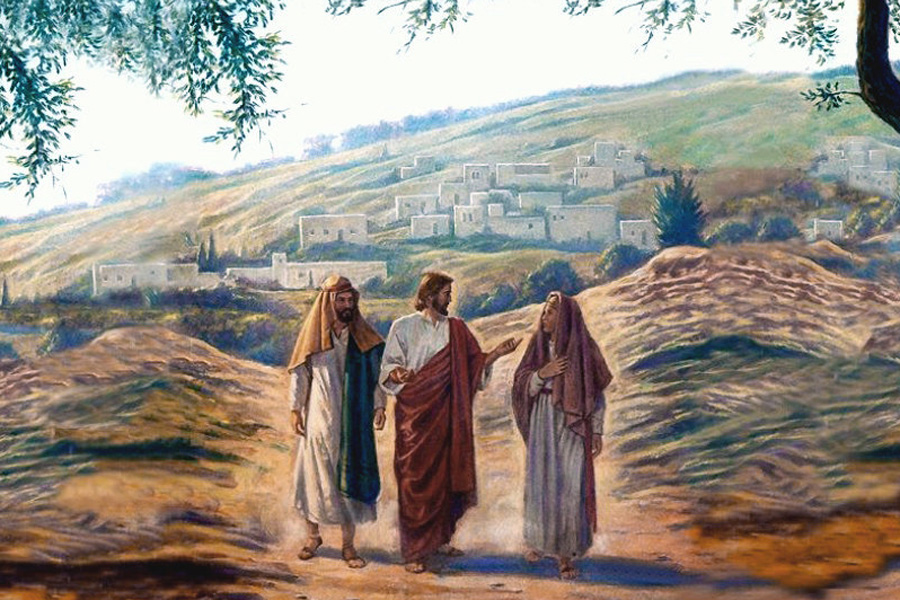
Gospel Mediation - Encourage Deeper Understanding of Scripture
04-19-2026Pastoral Reflections© LPi Fr. John MuirWhen I first read Homer’s Odyssey as a teenager, one scene captured my imagination: Odysseus finally returning home after 20 years, yet no one recognized him. Distinguished as a beggar, he speaks with his wife, his son and even his enemies. He is fully present, yet hidden. Only at the right moment does he reveal himself, and everyone realizes he has been with them all along. I was struck by the mystery that he could be so close to his loved ones, and yet they simply could not identify him.
READ MORE
(Practicing) Catholic - Recognize God in Your Ordinary Moments
04-12-2026Pastoral ReflectionsColleen Jurkiewicz DormanMini reflection: There is a reason Christ showed his wounds as he said the words, “Peace be with you.” It was not just a means of identifying himself — it was a catechism lesson. Here, he was saying. Here is the peace you will not find anywhere else.
Within Thy Wounds
READ MOREEaster Season 2026
04-07-2026Reflections and ResourcesThe Easter season begins on Easter Sunday and lasts until the celebration of the feast of Pentecost. It is a season of Alleluias and constant reminders that Jesus, who was mocked, ridiculed, and crucified has risen from the dead. On the Wednesday of the Octave of Easter (April 8), and again on the Third Sunday of Easter (April 19) we hear the gospel reading that recounts Jesus’ post-resurrection walk with two disciples on the road to Emmaus (Luke 24:13-35). After the disciples recognize Jesus when he broke bread with them, they asked each other “Were not our hearts burning within us while he spoke to us on the way and opened the Scriptures to us?” This “hearts were burning” experience of the disciples is one which, according to the US Bishops in their 1999 document on adult faith formation entitled Our Hearts Were Burning Within Us, tells us that the disciples “saw for an instant the full scope of the Father's loving plan and its high point in Christ's death and resurrection.
READ MORE
Easter Sunday - He Has Been Raised!
04-05-2026Pastoral ReflectionsFr. Wally KeymontThe month of March and the first few weeks of April is a time of mixture: crocuses and snowflakes, new buds and dry leaves. Crosswinds blow both cold and warm. In early spring, we are heartened by the coming of spring and the disheartening trek to H&R Block to submit taxes! March and early April is that in- between time when we are not quite sure. We are caught in the middle of seasons…do I put away the snow shovels or bring out the deck furniture?
READ MORELent 2026
02-18-2026Reflections and ResourcesOn Ash Wednesday, the reading from the Gospel of Matthew, presents us with the three pillars of Lent: almsgiving, prayer, and fasting. We are reminded by Jesus himself that any good deeds, prayer and fasting that we do ought to be performed/completed in a quiet, unassuming manner…not done for show or praise. Go to the Busted Halo Fast/Pray/Give calendar at lent.bustedhalo.com to find daily suggestions (the Daily Jolt and MicroChallenge) on how to live the Lenten pillars.
READ MORE
A Special Welcome to Our New Director of Music
02-01-2026Pastoral ReflectionsRev. Bob PoitrasThis weekend, I am happy to welcome our new Director of Music and Organist, Krishan Oberoi, to St. Mary Parish. Last October, I invited five parishioners to help me form a search committee for our next Director of Music and Organist.
Our first order of business was to create a job description and a job opening ad. After posting the ad, I received many applications, and from those applications, the committee and I invited four applicants for an interview.
READ MOREJanuary/February 2026 (Ordinary Time I)
01-12-2026Reflections and ResourcesMonday, January 12 is the official beginning of the liturgical season of Ordinary Time. It is the first segment of the 2026 Ordinary Time season; the second segment starts after the conclusion of the Easter Season (Pentecost Sunday). Our current phase of Ordinary Time begins on the day after we celebrate Jesus’ Baptism and ends on Tuesday, February 17, the day before Ash Wednesday and the beginning of the liturgical season of Lent. Maxwell E. Johnson, in an essay entitled “The Acceptable Year of the Lord”, which is published in the January issue of Give Us This Day: Daily Prayer for Today’s Catholic, reminds us that Christ is present to us in our own time, not just in history. He writes that the entire liturgical year, composed of its numerous seasons, fasts and feasts, “is not a historical re-enactment of past events, but rather the saving encounter with Christ who lives ‘today’ for us and for our salvation…” (p. 90). Ordinary Time, the longest of the church’s liturgical seasons, provides us with the opportunity to experience, in Jesus, God’s call, God’s teachings and God’s actions in our world.
READ MORE